
Is the KONG Extreme Safe for Dogs? What KONG Says
What KONG says about the safety of its Extreme line, what veterinary sources add, and what remains unknown.
 By Casey Hollis
Updated November 12, 2026
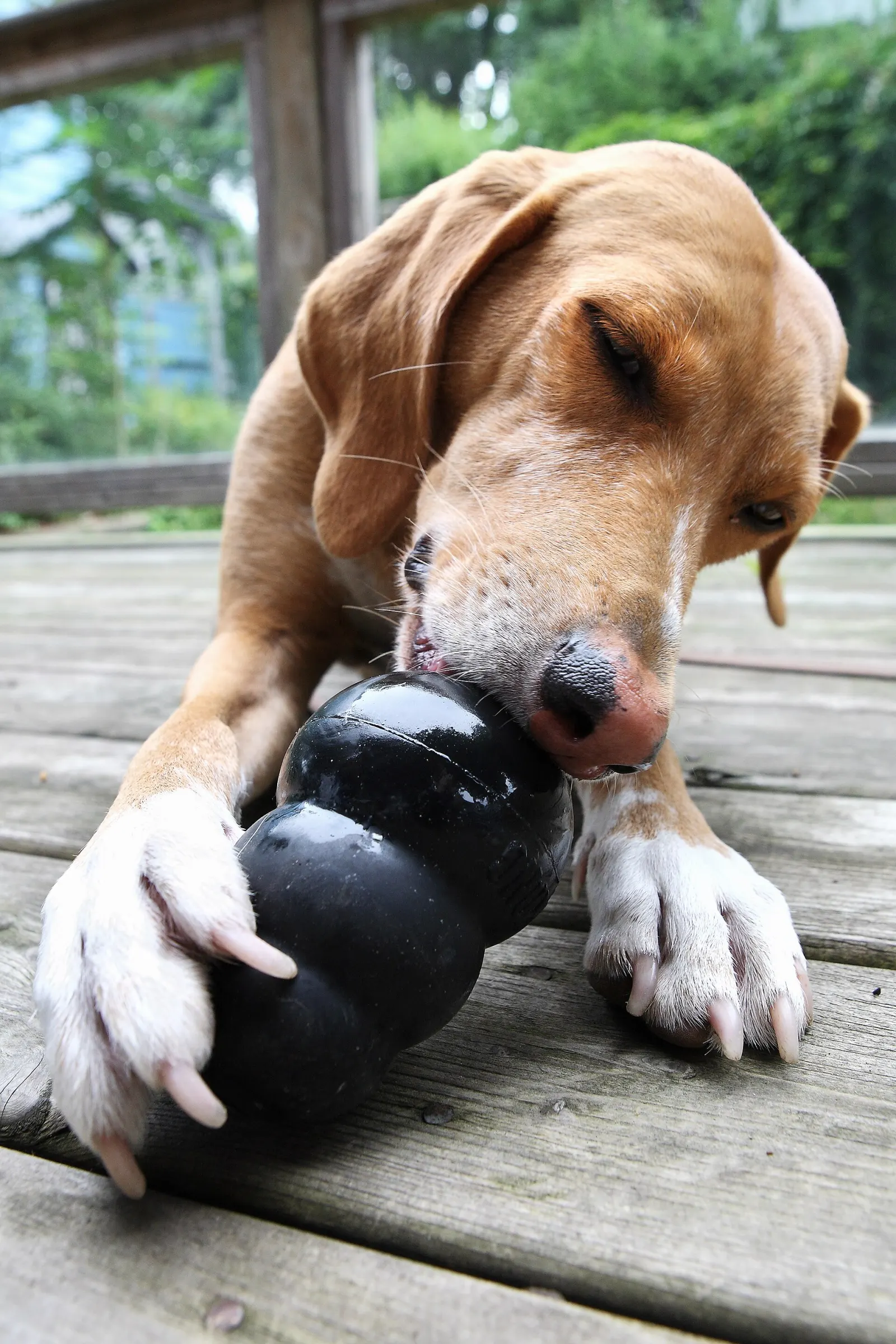
“Is KONG Extreme safe?” is one of the most common questions about the toy. KONG’s own answer is more careful than the word “Extreme” suggests: the line is built for aggressive chewers, but no toy is indestructible, and loose pieces of any toy can be harmful if swallowed. This guide sets out what KONG says and what that leaves open.
Note: This article is general information, not veterinary advice. If your dog swallows a piece of any toy, contact your veterinarian.
Quick answer
The KONG Extreme is designed as a durable rubber toy for power chewers, and KONG recommends supervised use, regular inspection, the right size, and replacing it at the first cracks or missing pieces. This guide covers KONG’s published use instructions and warnings. We found no independent data on how often the toy fails or harms dogs, so following those instructions does not prove the toy is safe for your dog. Our full KONG Extreme review covers fit and evidence in more detail.
What KONG says
KONG’s FAQ says (its Extreme product page adds “Supervised use only” and to discontinue use if the toy is damaged):
- The Extreme (black) line is “specifically engineered for aggressive chewers using a firmer, more durable rubber compound.”
- “[N]o dog toy is completely indestructible.”
- KONG recommends supervising your pet “whenever they are playing with any non-edible toy or object.”
- “Replace a toy as soon as you notice any signs of damage, such as cracks, missing pieces.”
- “Loose pieces of any toy can be harmful if swallowed,” and if you think your dog swallowed a fragment, contact your veterinarian.
- “When in doubt, size up for added durability and safety, especially for power chewers.” The toy should be too big to fit in the dog’s mouth.
- KONG’s FAQ tells owners whose dogs destroy a standard toy to move up to a toy rated for aggressive chewers, and points to the Extreme line for that. It does not say what to do if a dog breaks an Extreme beyond replacing it at the first signs of damage.
These are manufacturer statements. They show how the brand intends the toy to be used. They do not show how it performs.

What the veterinary sources add
None of the veterinary pages we read evaluates the KONG Extreme by name. Their general checks still apply:
- VCA Animal Hospitals advises against toys small enough to fit entirely in the mouth, and advises supervision, taking a toy away if your dog is chewing off chunks, and retiring a toy once rubber is broken.
- Cornell’s Riney Canine Health Center says fractured teeth are commonly caused by chewing very hard objects, and lists toys from KONG and Goughnuts among “good options.” Cornell does not name the Extreme specifically, and says to choose the size appropriate for your dog.
KONG’s FAQ says the Extreme uses a firmer rubber compound. In the sources we read, we found none that measures how hard it is or compares its hardness with a dog’s tooth risk. VCA gives a general check, not one specific to KONG: toys should be soft enough to indent with a fingernail. Ask your veterinarian how to apply it to your dog.
Who should skip it or be careful
- Dogs that repeatedly remove chunks of rubber. KONG says to replace it at the first missing pieces, and VCA says to take it away if the dog is chewing off chunks.
- Dogs with dental problems. Ask your veterinarian about hard chews.
- Dogs that cannot be supervised.
- Dogs that have already swallowed pieces of toys. See what to do if a dog swallows part of a toy.
Using it safely
- Choose the size by your dog’s weight and chewing, and size up for a power chewer if KONG’s guidance fits. KONG’s size bands overlap; see our chew toy size guide.
- Inspect it every time and retire it at the first damage. See when to replace a dog chew toy.
- If you stuff and freeze it, see what to put in a KONG.
- Clean it as KONG advises. See how to clean dog chew toys.
What we cannot tell you
- How long a KONG Extreme lasts for your dog. KONG gives no lifespan.
- How often it fails or causes harm. We found no independent data.
- Whether it is safer than another brand’s toy.
How we evaluated this guide
This guide is research-based and does not provide veterinary advice. GetDogVerdict did not physically evaluate any product. It summarizes KONG’s FAQ and product page (manufacturer statements, which establish intended use and warnings but not performance), VCA Animal Hospitals and Cornell’s Riney Canine Health Center. The VCA and Cornell pages show no named author or date and do not evaluate the KONG Extreme by name. Evidence Confidence is MEDIUM for KONG’s stated use and warnings and LOW for how it performs or how often it fails. This page contains no affiliate links, because GetDogVerdict does not place them on safety pages. Last reviewed: October 22, 2026. Read more in How We Review and our Editorial Policy.
Bottom line
KONG gives use and inspection guidance for the Extreme: right size, supervision, and replacement at the first damage. That guidance does not establish that the toy is safe for every dog. Supervise chewing, stop using it if it is damaged, and talk to your veterinarian if pieces may have been swallowed. For product options, see our guide to dog toys for aggressive chewers.
Related: Are chew toys bad for dogs?.
About the author
Casey Hollis is the editorial pen name of GetDogVerdict, used as the site's byline. It does not indicate a veterinary degree or any other professional credential. Articles are research-based: they summarize veterinary, manufacturer and owner-reported sources, grade how strong the evidence is, and say what remains unknown. GetDogVerdict does not claim to have physically evaluated a product unless it states so. A person reads and approves every article before it is published.