
Are Chew Toys Bad for Dogs? Risks and Safe Choices
Whether chew toys are bad for dogs: the benefit, the three main risks vet sources describe, and a short checklist for choosing one.
 By Casey Hollis
Updated October 26, 2026
Chew toys are not bad for dogs as a category, and vet sources do not say so. They do point to specific ways a chew goes wrong: it is too hard for the teeth, too small for the dog, or it starts coming apart. This guide separates the benefit from the risks and shows what each source says to check.
Note: This article is general information, not veterinary advice. If your dog swallows part of a toy, breaks a tooth or shows pain, contact your veterinarian.
Quick answer
Chewing is normal for dogs and a good outlet, and a well-chosen toy can serve it. The risks sit with the wrong toy for the wrong dog: very hard items, items small enough to swallow, and toys that are damaged or shedding pieces. “There is no such thing as an indestructible toy,” as John Lewis, VMD, Dipl. AVDC, wrote in Veterinary Practice News, so supervision and replacement matter more than the label.
The case for chew toys
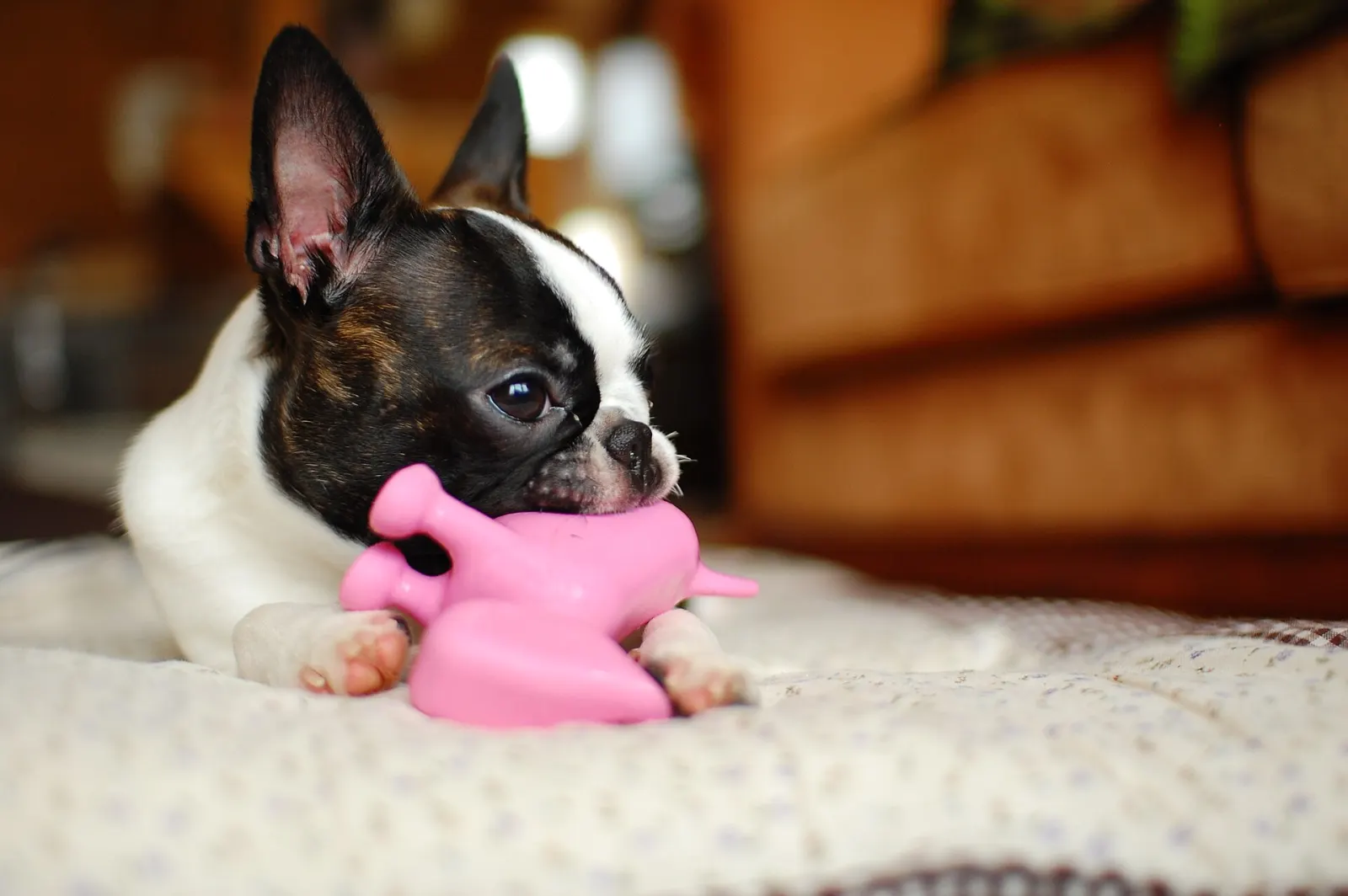
The ASPCA calls chewing “a perfectly normal behavior for dogs of all ages,” says it relieves teething pain in young dogs, and says it “combats boredom and can relieve mild anxiety or frustration.” Its advice for dogs that chew the wrong things is to provide “plenty of his own toys and inedible chew bones.” So chew toys have a real job: they give a normal behavior somewhere safe to go.
The three main risks
1. Too hard for teeth: can chew toys hurt dogs’ teeth?
Cornell’s Riney Canine Health Center says fractured teeth “are commonly caused by chewing very hard objects” and that “even chew toys can be a cause.” John Lewis, VMD, Dipl. AVDC, writing in Veterinary Practice News, says chewing the wrong item “may result in fractured teeth, worn teeth or trauma to soft tissue,” and lists real bones, nylon bones, antlers, cow hooves, rocks and ice cubes among common culprits. Lewis cites a rule from veterinary dentist Fraser Hale: if you would not want to be hit on the kneecap with a toy or treat, do not give it to your dog. VCA Animal Hospitals gives a simpler check: toys “soft enough that you can indent them with a fingernail” (VCA). Our hard nylon chews guide applies this to nylon.
2. Too small, or coming apart
VCA says a toy “should never be so small as to easily fit entirely in your dog’s mouth,” advises avoiding toys with removable parts, and says to be ready to take away a toy if your dog is chewing off chunks. It adds that when stuffing shows, rope is frayed or rubber is broken, it is time to retire the toy. Cornell lists toys among the objects dogs commonly swallow and describes gastrointestinal obstruction as an emergency that often needs surgery. See what to do if a dog swallows part of a toy and when to replace a dog chew toy.
3. The wrong toy for the dog
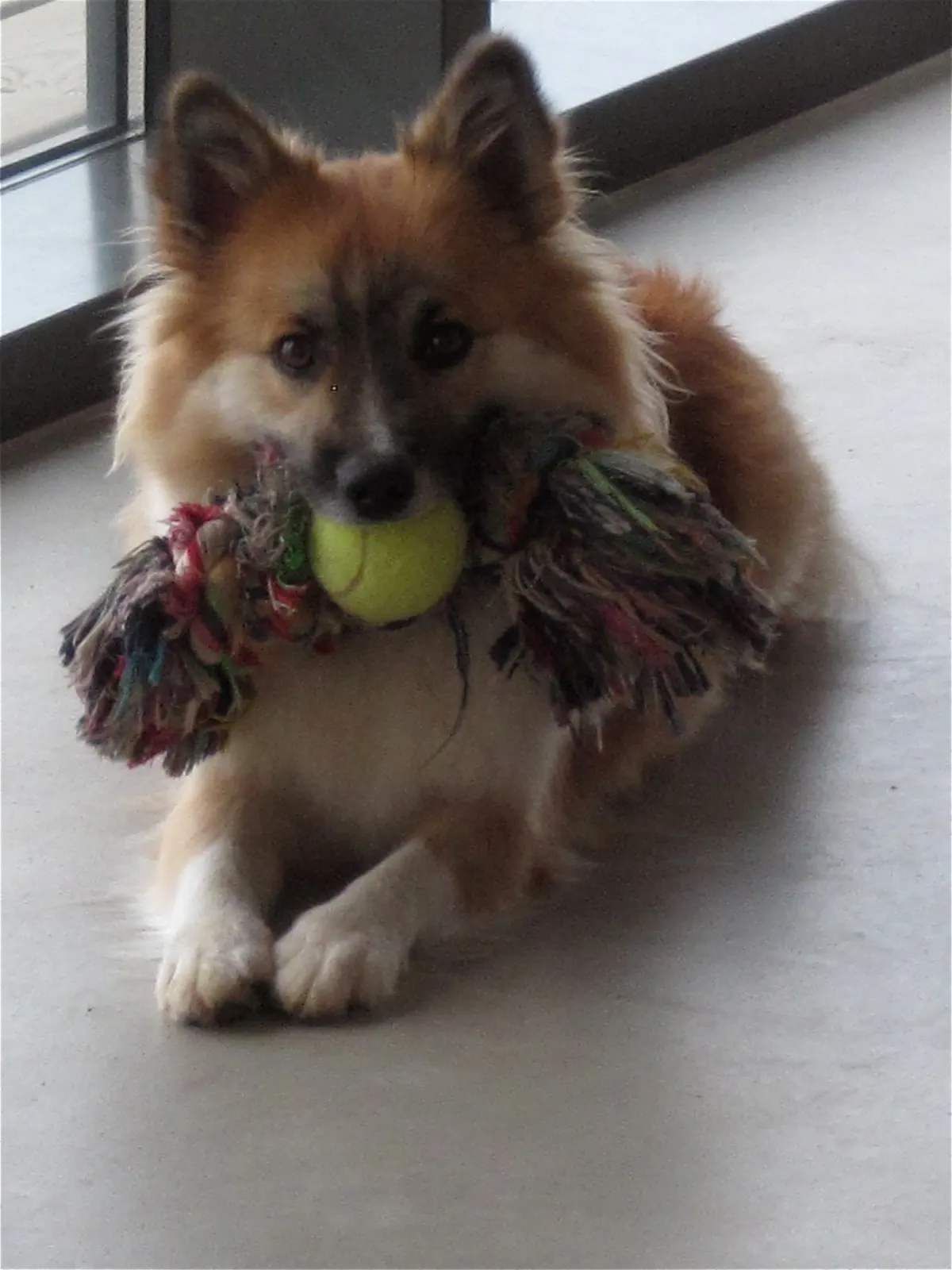
Our guides on rope toys and tennis balls show how a common toy becomes a risk for the dogs that shred or crush it. Our size guide covers matching toy size to the dog.
A short checklist from the sources
- Choose a chew you can dent with a fingernail (VCA, Cornell).
- Choose a size that cannot fit entirely in the mouth (VCA).
- Avoid removable parts (VCA).
- Supervise, and take away a toy that sheds chunks (VCA).
- Retire a toy when it is cracked, frayed or showing stuffing (VCA).
- Ask your veterinarian what is safe to give (ASPCA).
Who should be most careful
- Dogs that chew hard and destroy toys. See is my dog an aggressive chewer.
- Dogs with dental problems or a past fracture.
- Puppies and dogs that swallow pieces.
What we cannot tell you
- How often chew toys cause fractures or blockages. We found no incidence data specific to chew toys.
- Whether a given brand is safer than another.
- Whether your dog’s teeth can handle a hard chew. A veterinarian can check.
How we evaluated this guide
This guide is research-based and does not provide veterinary advice. GetDogVerdict did not physically evaluate any product. It summarizes the ASPCA, Cornell’s Riney Canine Health Center, VCA Animal Hospitals and a 2017 article by a veterinary dentist in Veterinary Practice News. The ASPCA and VCA pages show no named author or date. Cornell’s tooth page is a reprint from the DogWatch newsletter with no author or date shown, and its GI page was last updated in December 2024. They discuss chews in general and do not rank brands. Evidence Confidence is MEDIUM that hardness, size and wear are the main risks, and LOW for how often any risk occurs. This page contains no affiliate links, because GetDogVerdict does not place them on safety pages. Last reviewed: October 22, 2026. Read more in How We Review and our Editorial Policy.
Bottom line
Chew toys are a tool, not a hazard in themselves. Pick for softness, size and condition, supervise, replace early, and ask your veterinarian when you are unsure. For specific picks, see our guide to dog toys for aggressive chewers.
Related guides
- KONG Extreme price worth it? Tough Chew Toys Compared for 2026
- Best Dog Toys for Small Aggressive Chewers
Who Should Skip This
Skip this guide if your dog has a medical problem or has already swallowed something it should not have. Contact a veterinarian instead of relying on general advice.
About the author
Casey Hollis is the editorial pen name of GetDogVerdict, used as the site's byline. It does not indicate a veterinary degree or any other professional credential. Articles are research-based: they summarize veterinary, manufacturer and owner-reported sources, grade how strong the evidence is, and say what remains unknown. GetDogVerdict does not claim to have physically evaluated a product unless it states so. A person reads and approves every article before it is published.